Art Jakarta 2026
𝗔𝗿𝘁 𝗝𝗮𝗸𝗮𝗿𝘁𝗮 𝟮𝟬𝟮𝟲
2026.10.02—2026.10.04
JIExpo Kemayoran
APOproject is pleased to participate in 𝗔𝗿𝘁 𝗝𝗮𝗸𝗮𝗿𝘁𝗮 𝟮𝟬𝟮𝟲.
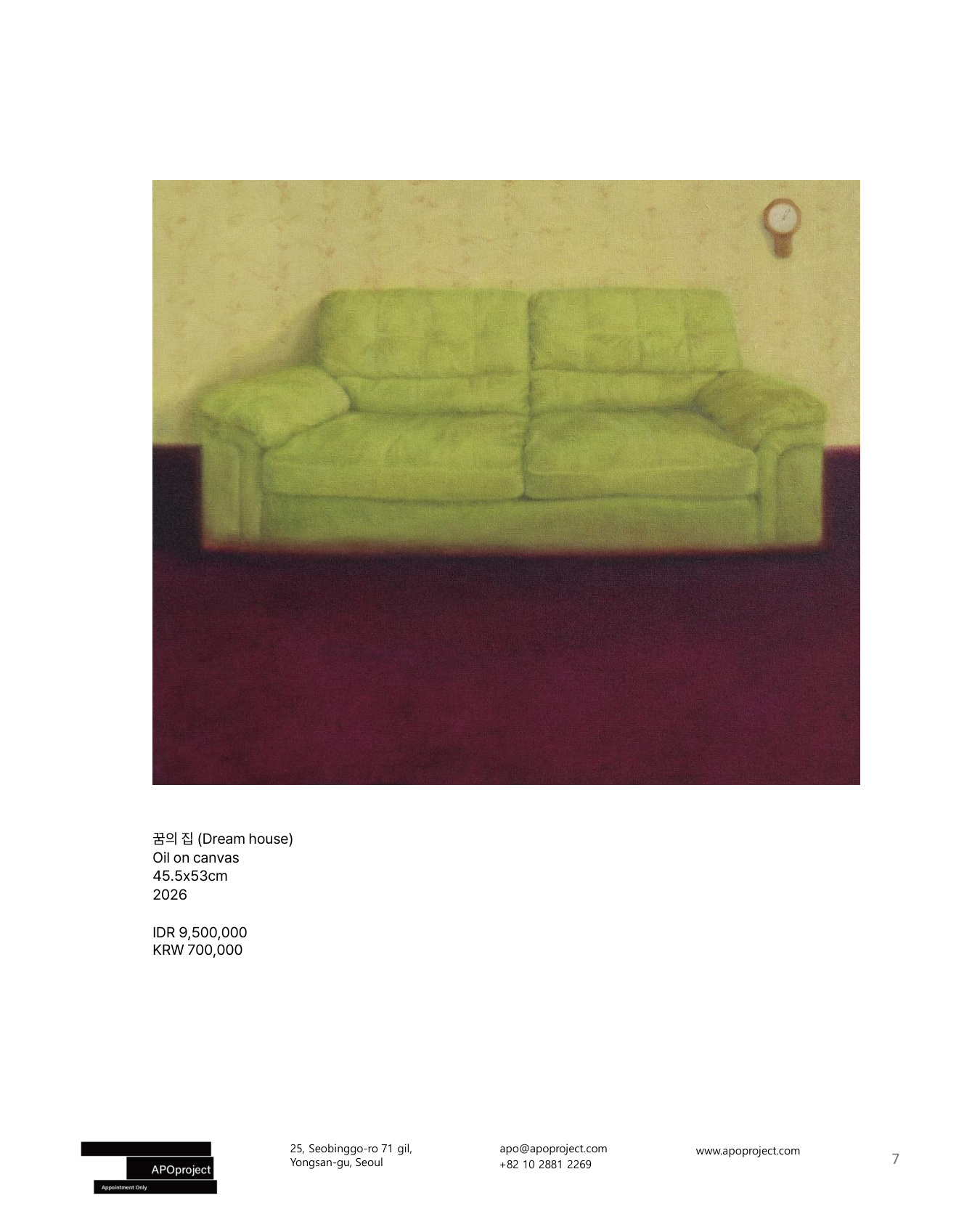
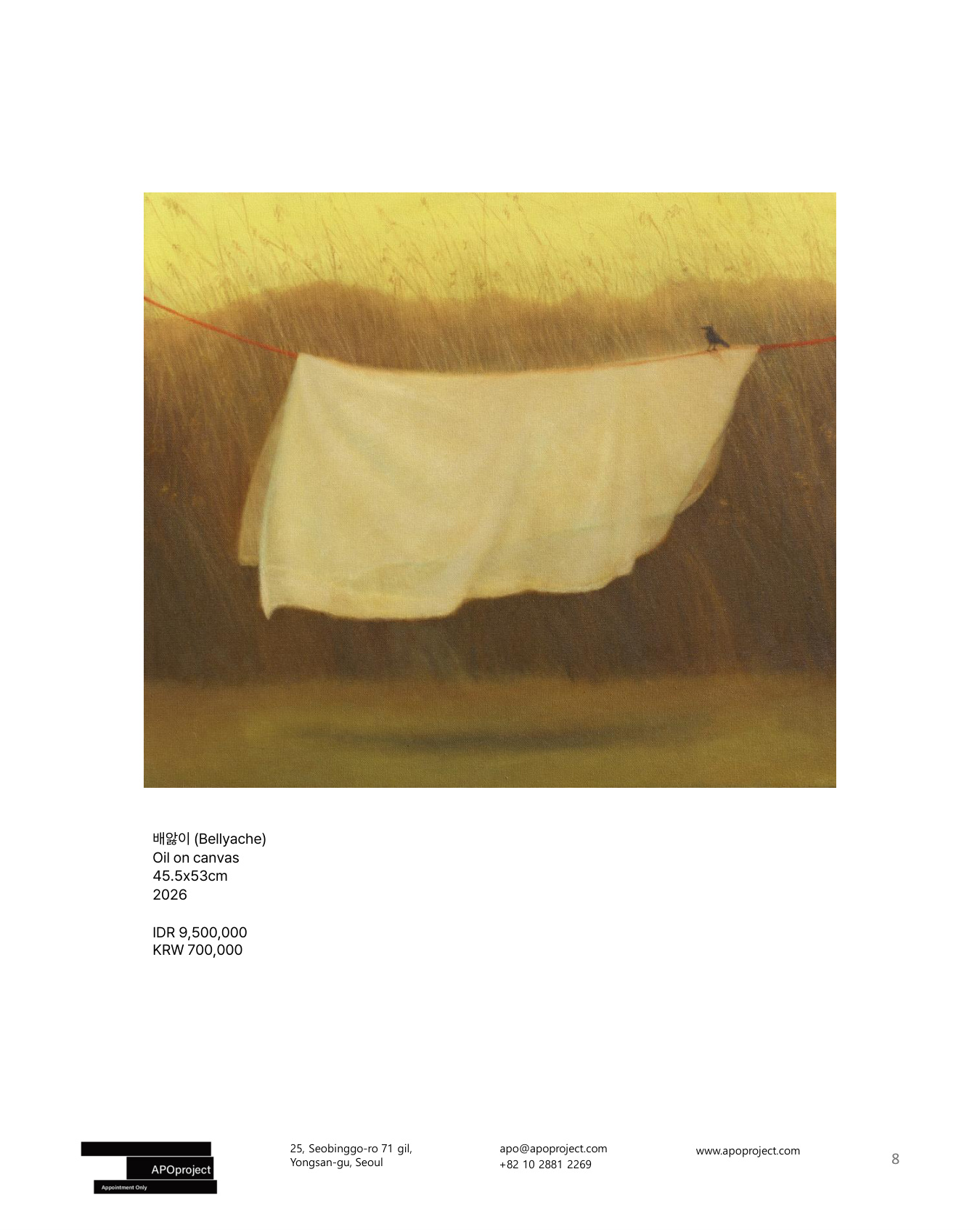
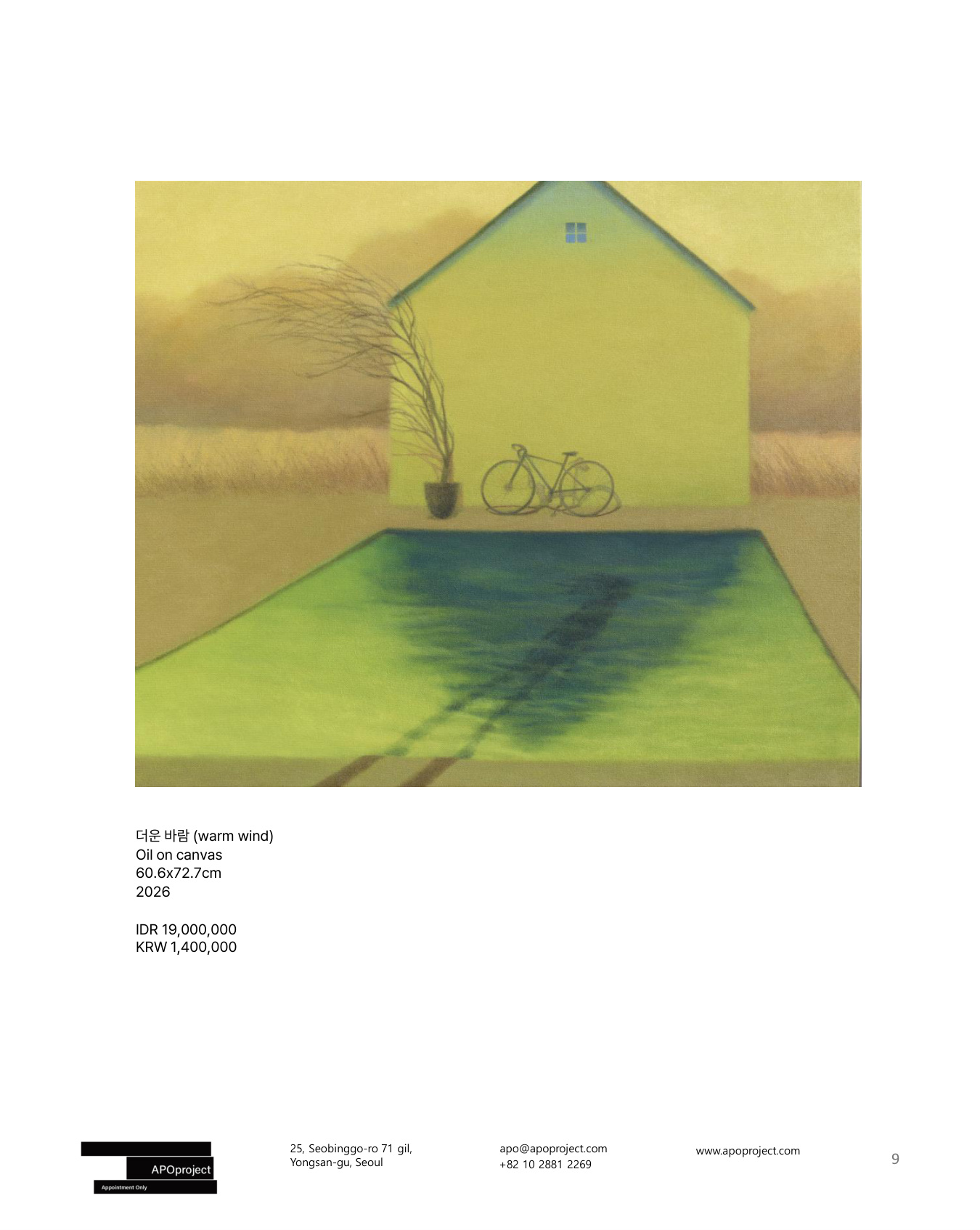
We are presenting works by 𝗬𝗼𝗼𝗻𝗷𝘂 𝗞𝗮𝗻𝗴, 𝗝𝗼𝗼𝗵𝘆𝗲 𝗠𝗼𝗼𝗻, 𝗜𝗻𝘁𝗮𝗻 𝗞𝘄𝗮𝗸, and 𝗝𝗮𝗲𝘄𝗼𝗻 𝗞𝗮𝗻𝗴 at 𝗕𝗼𝗼𝘁𝗵 𝗘𝟭𝟳 [𝗞𝗼𝗿𝗲𝗮 𝗙𝗼𝗰𝘂𝘀].
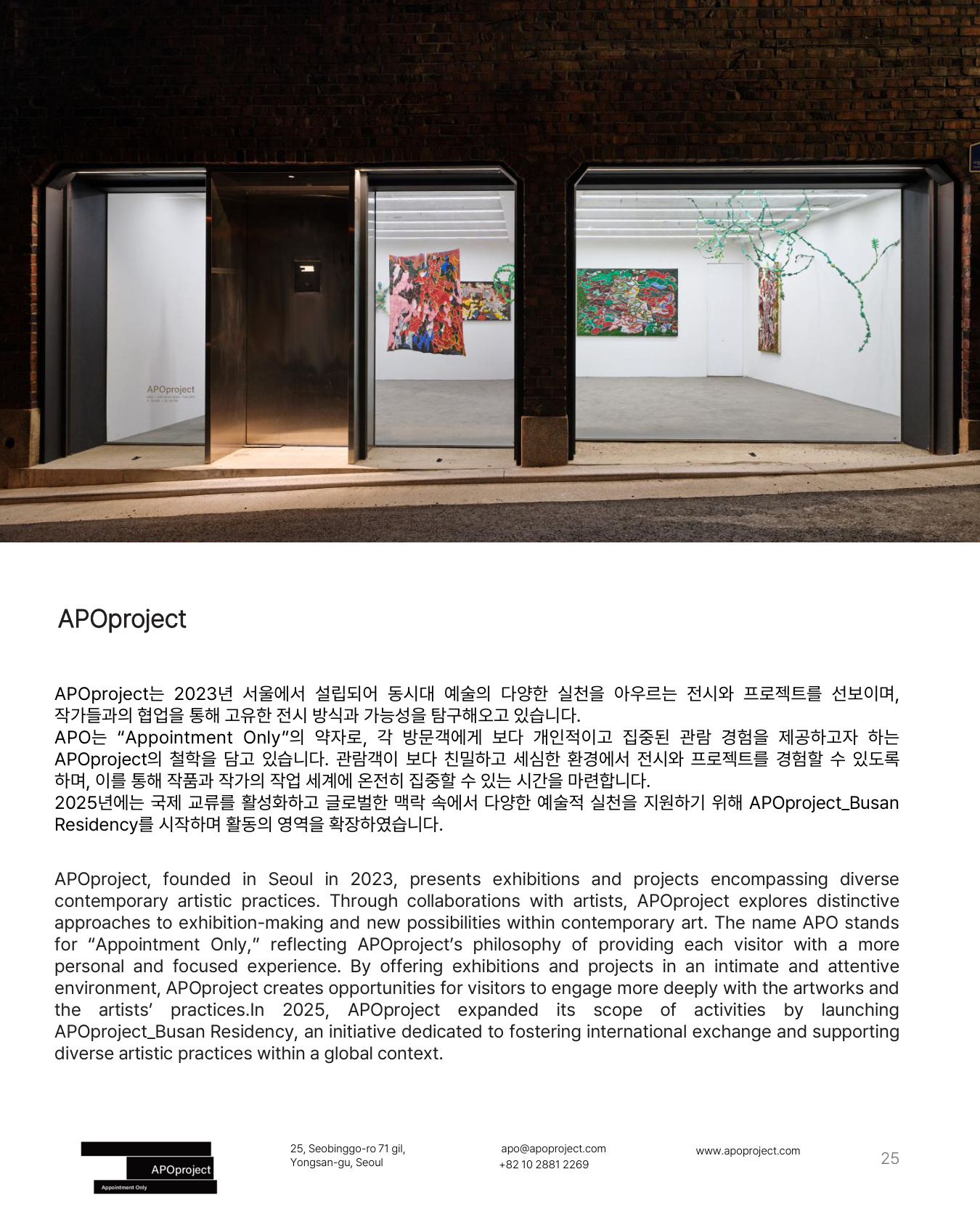
APOproject, founded in Seoul in 2023, presents exhibitions and projects across contemporary practices, collaborating with artists to explore distinctive approaches to exhibition making.
The name APO stands for Appointment Only, reflecting our philosophy of providing a personalized and focused experience for each visitor.
By operating on an appointment basis, we ensure that every exhibition and project is experienced in an intimate and attentive environment, allowing the artworks and artists to be fully appreciated.
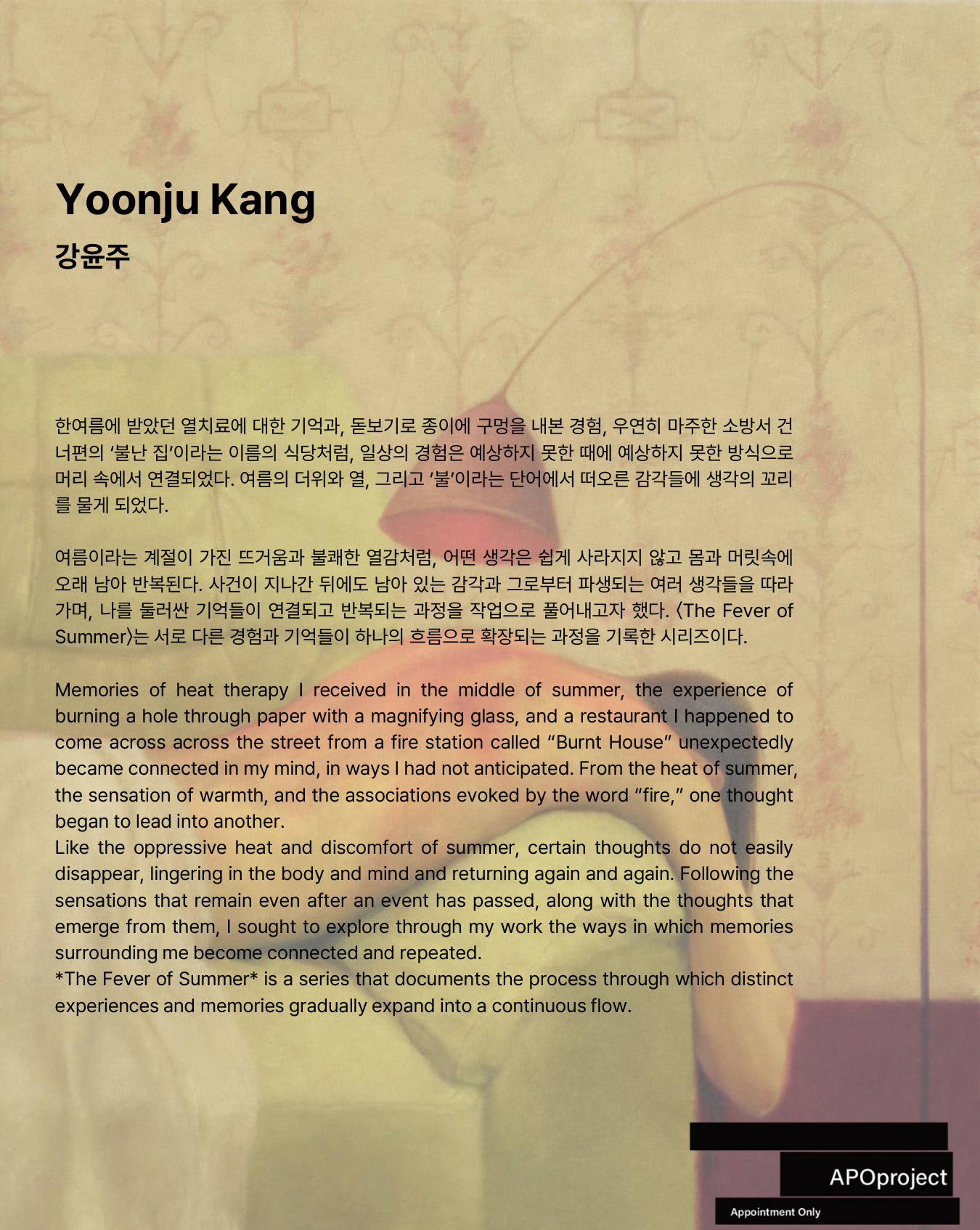
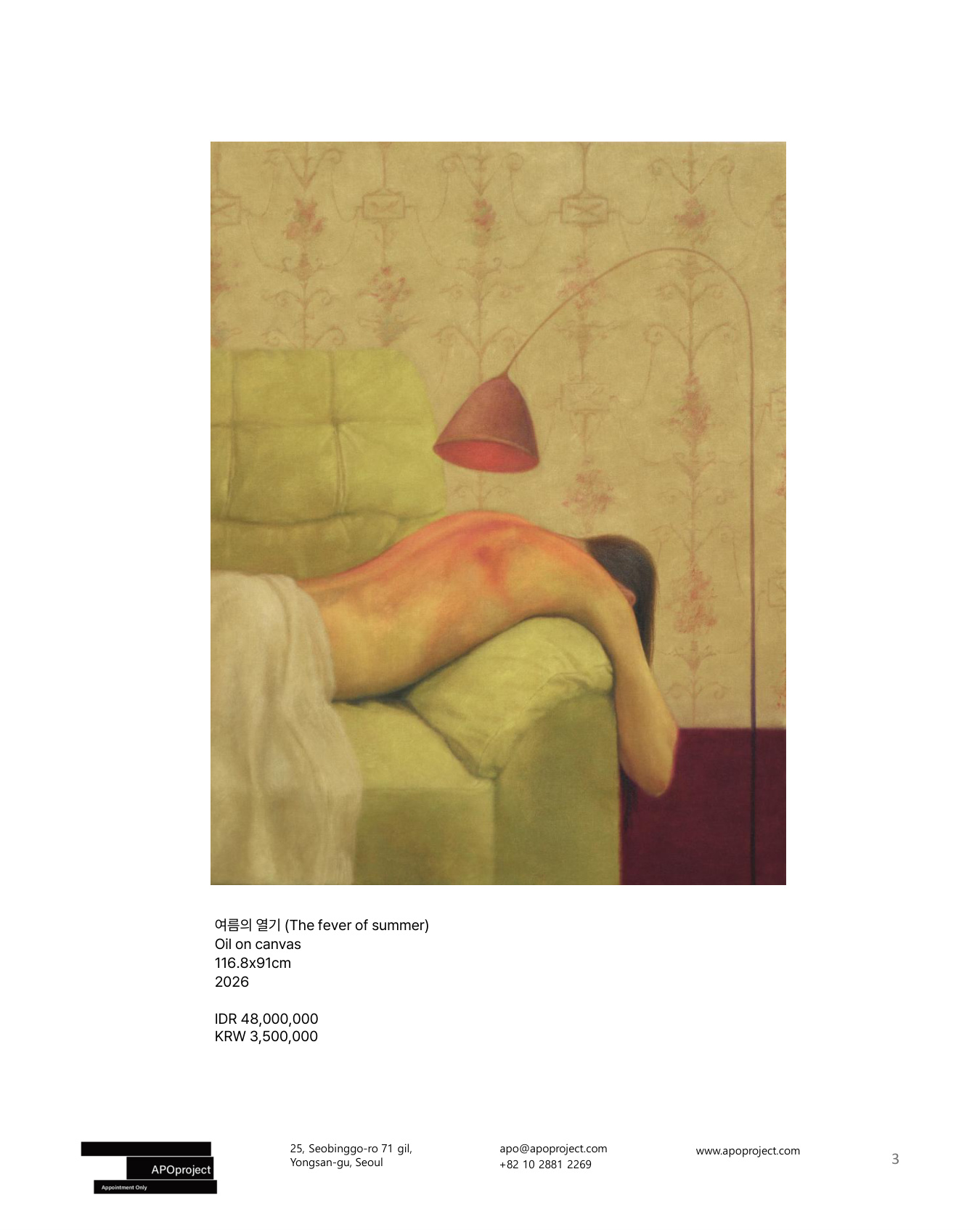
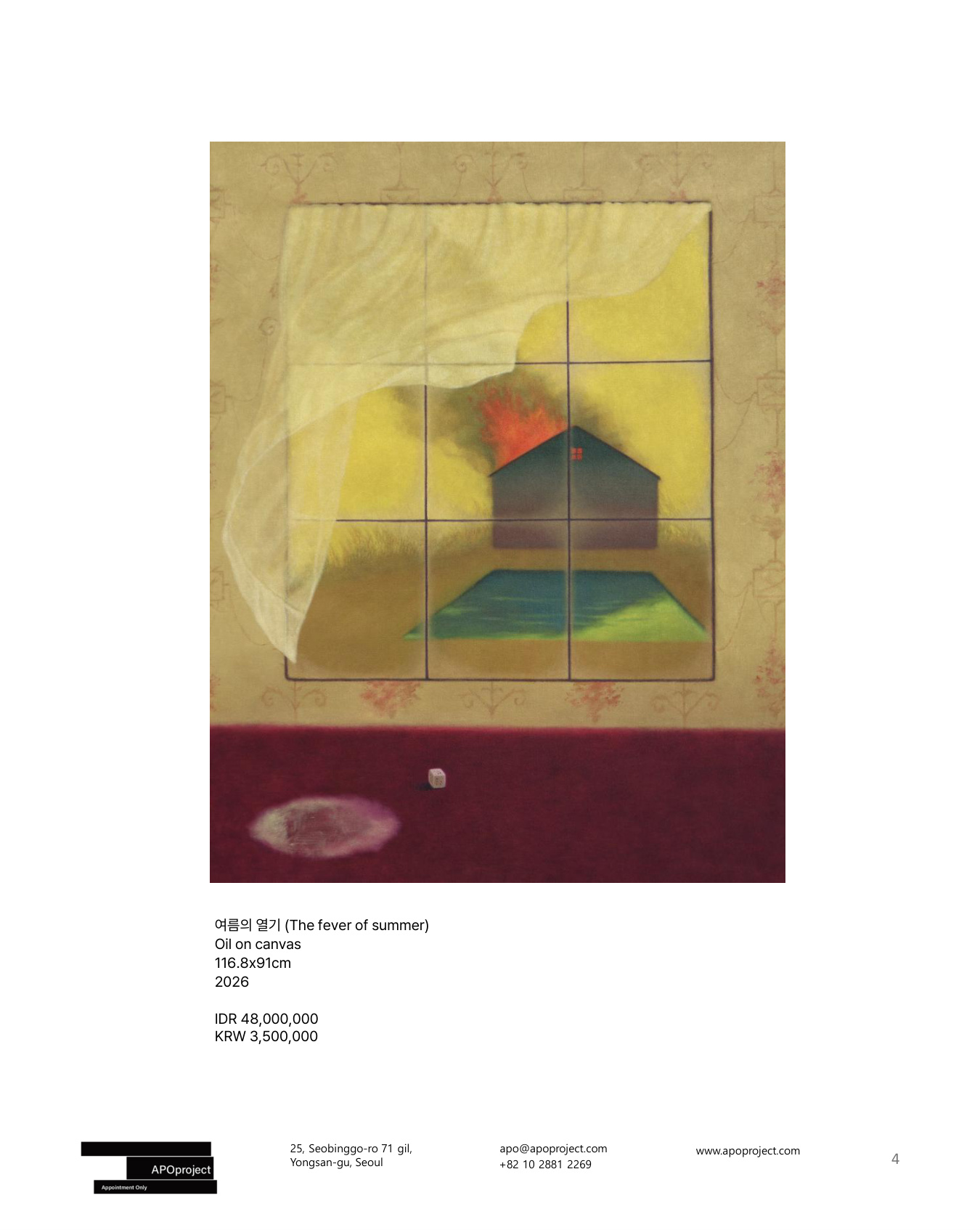
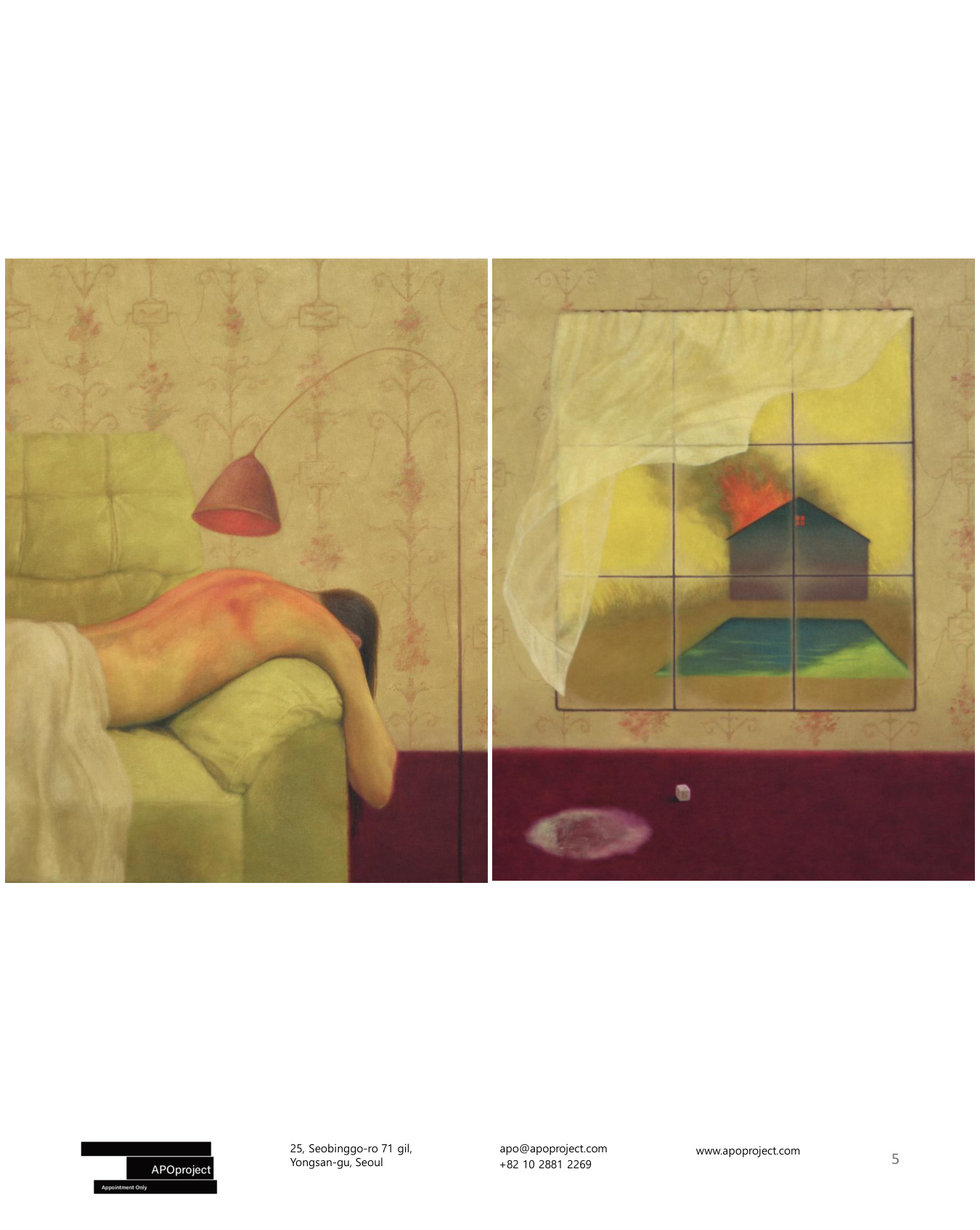
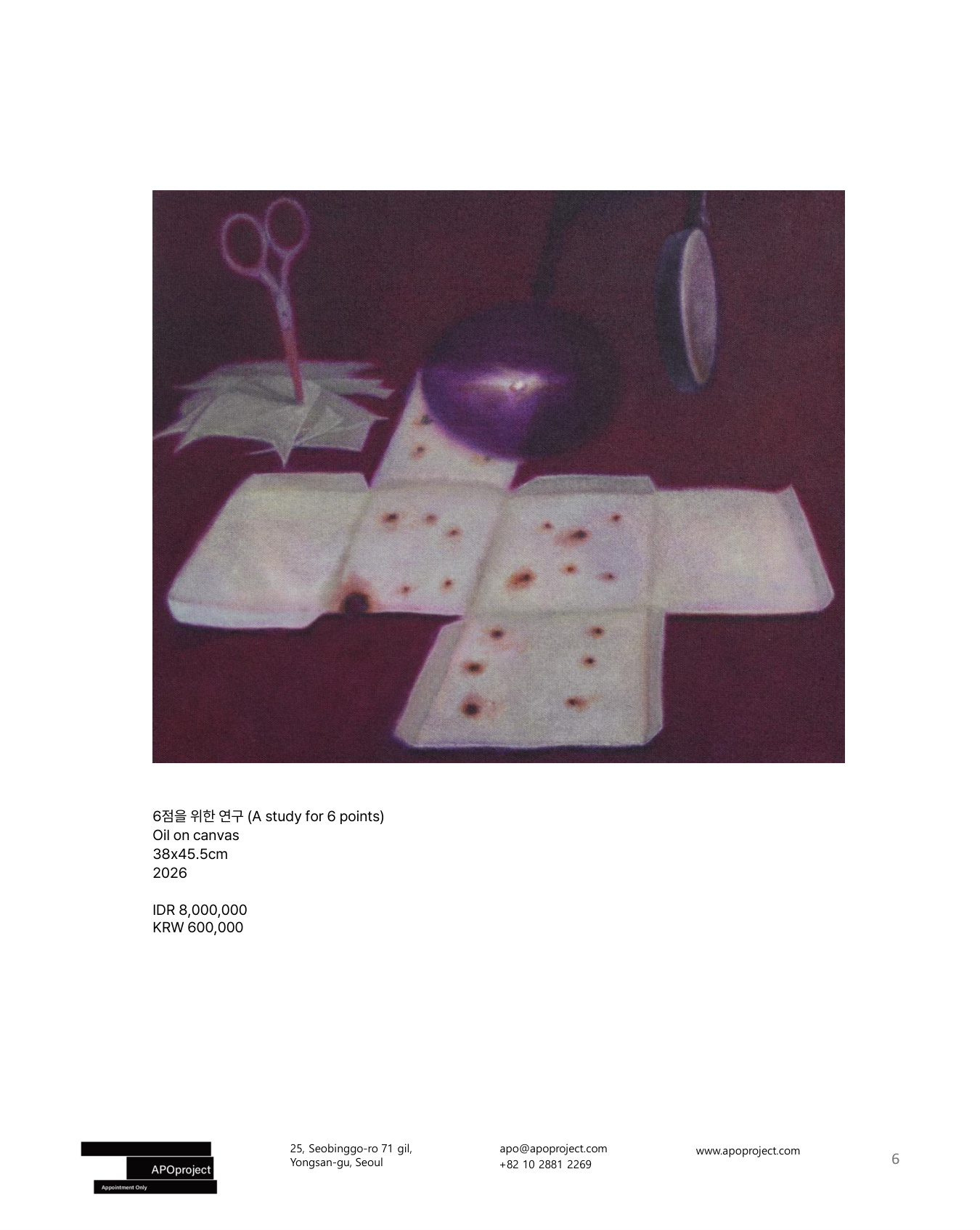
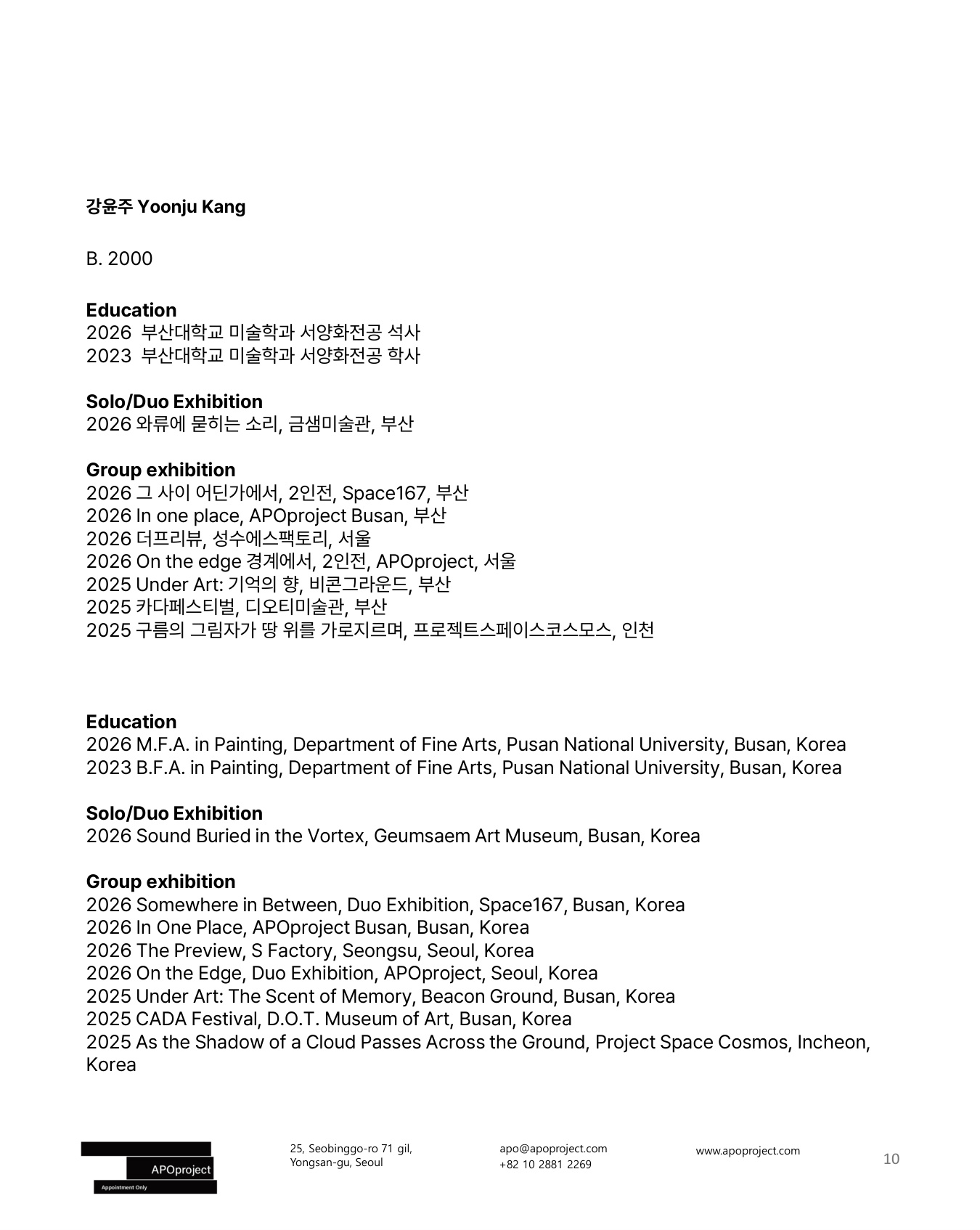
Yoonju Kang explores the ways in which seemingly unrelated experiences and memories unexpectedly connect in the mind. Memories of heat therapy during midsummer, the experience of burning holes into paper with a magnifying glass, and an encounter with a restaurant named “Burning House” across from a fire station became linked through associations with summer, heat, and fire. Kang follows these lingering sensations and chains of thought, focusing on how certain experiences continue to remain in the body and mind even after the original event has passed. Her series The Fever of Summer traces the process through which separate memories and experiences expand into a continuous flow of sensation and thought.
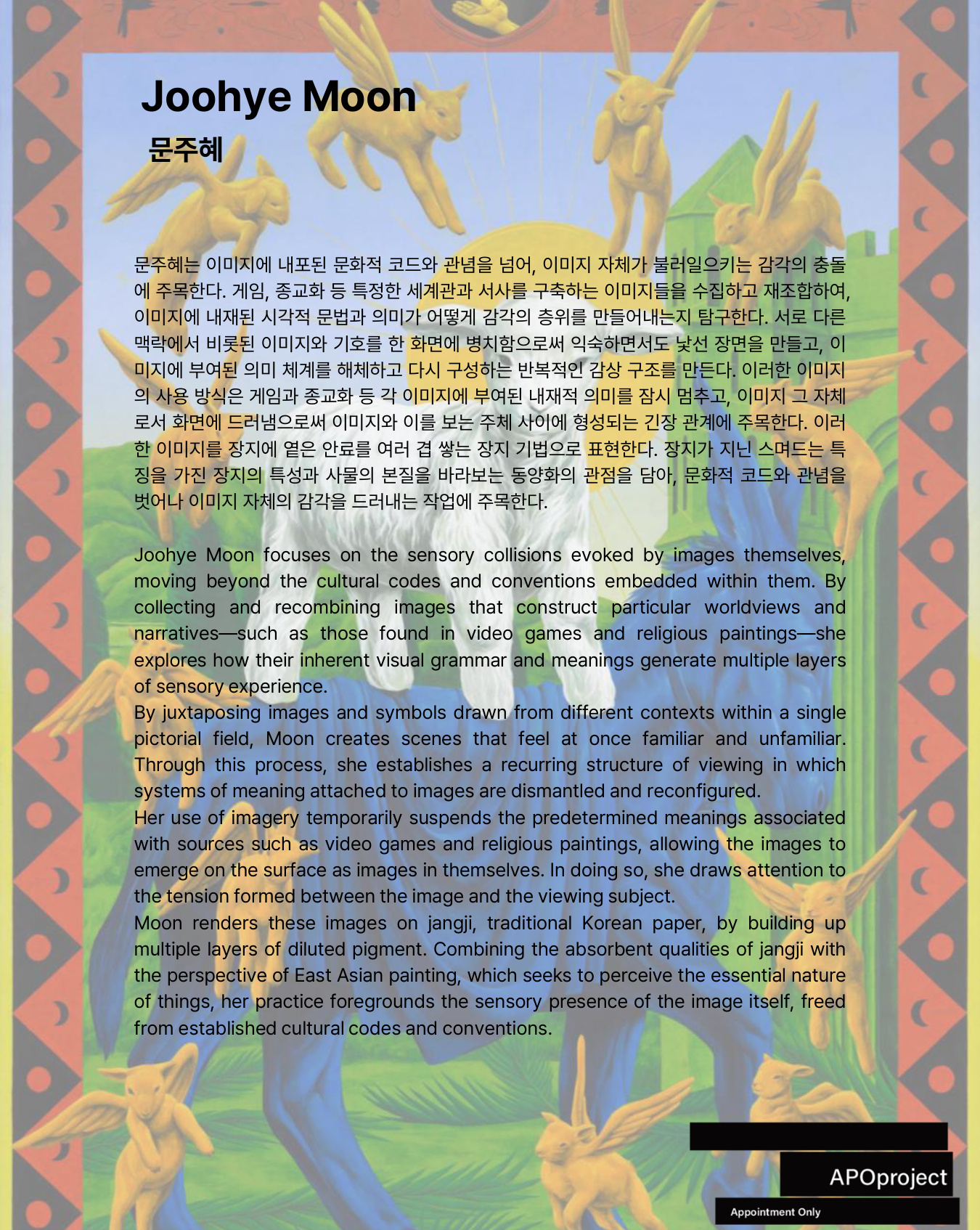
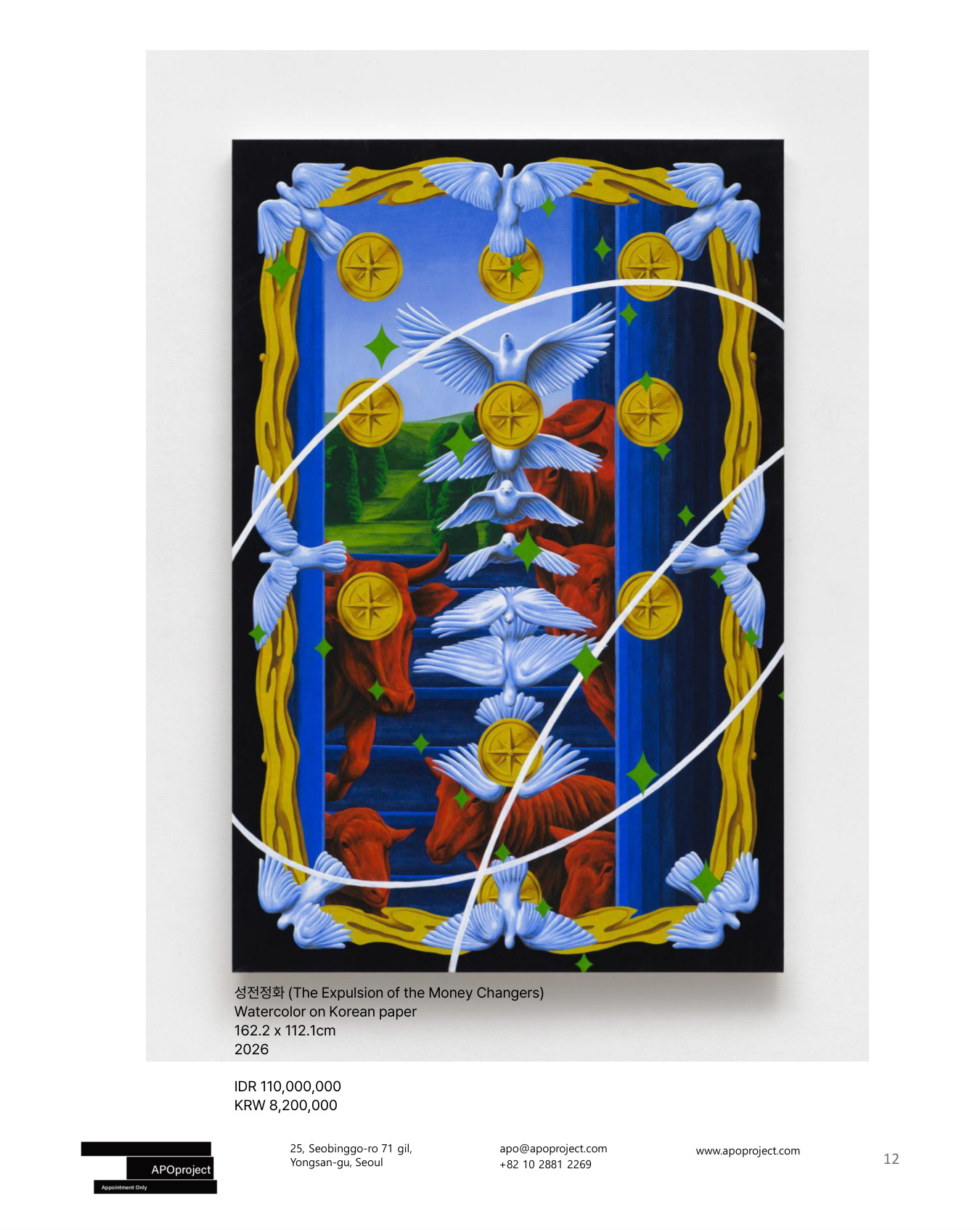
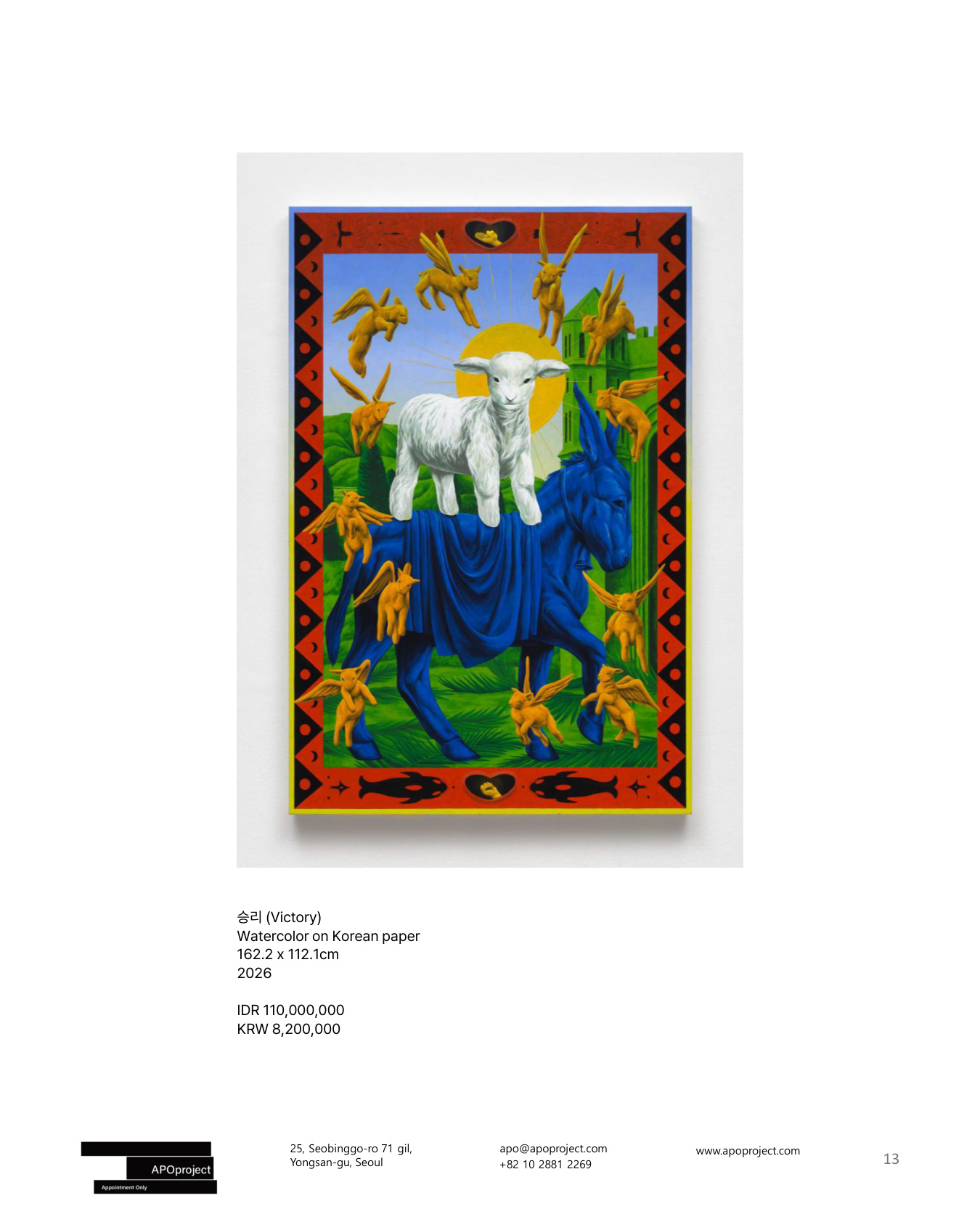
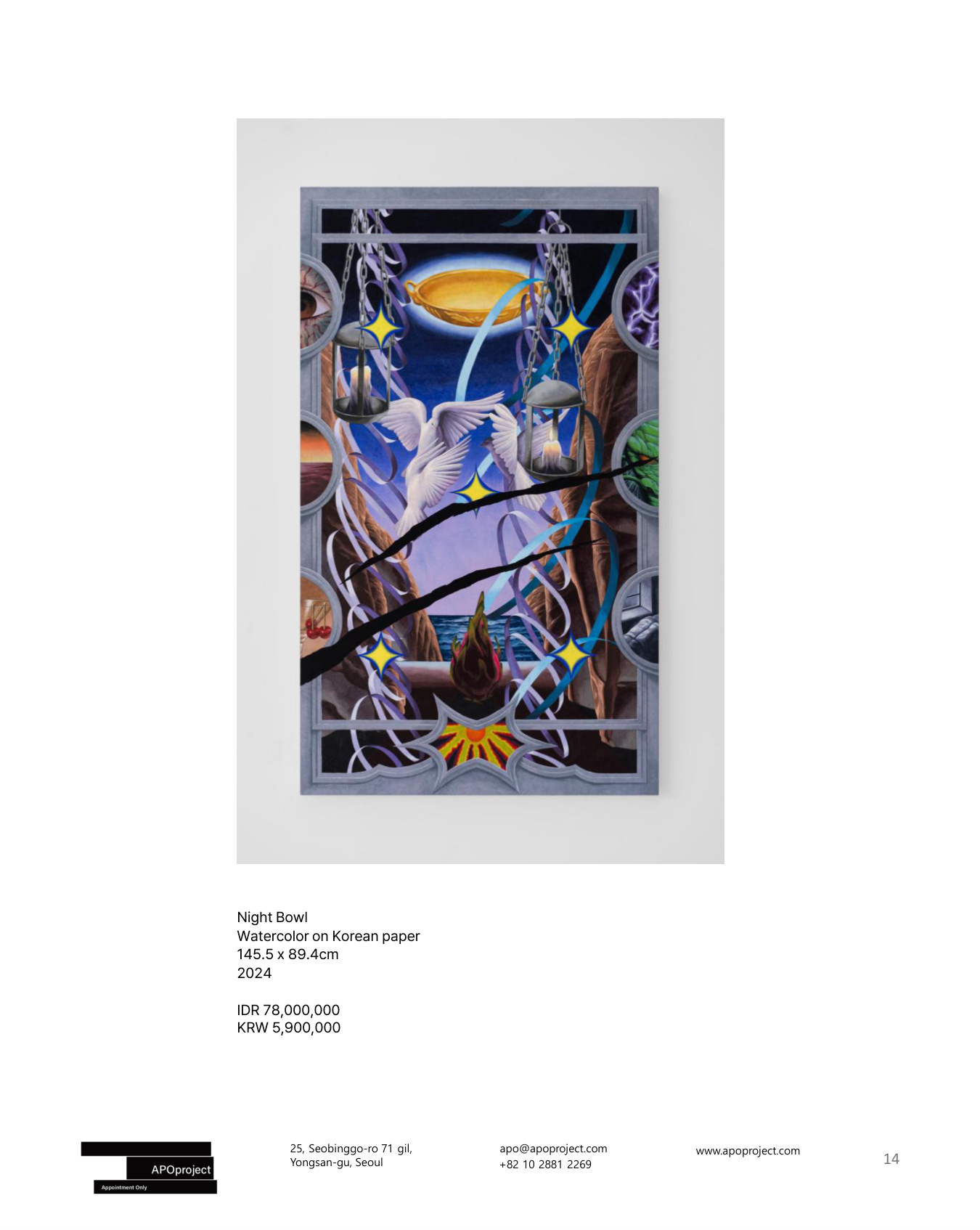
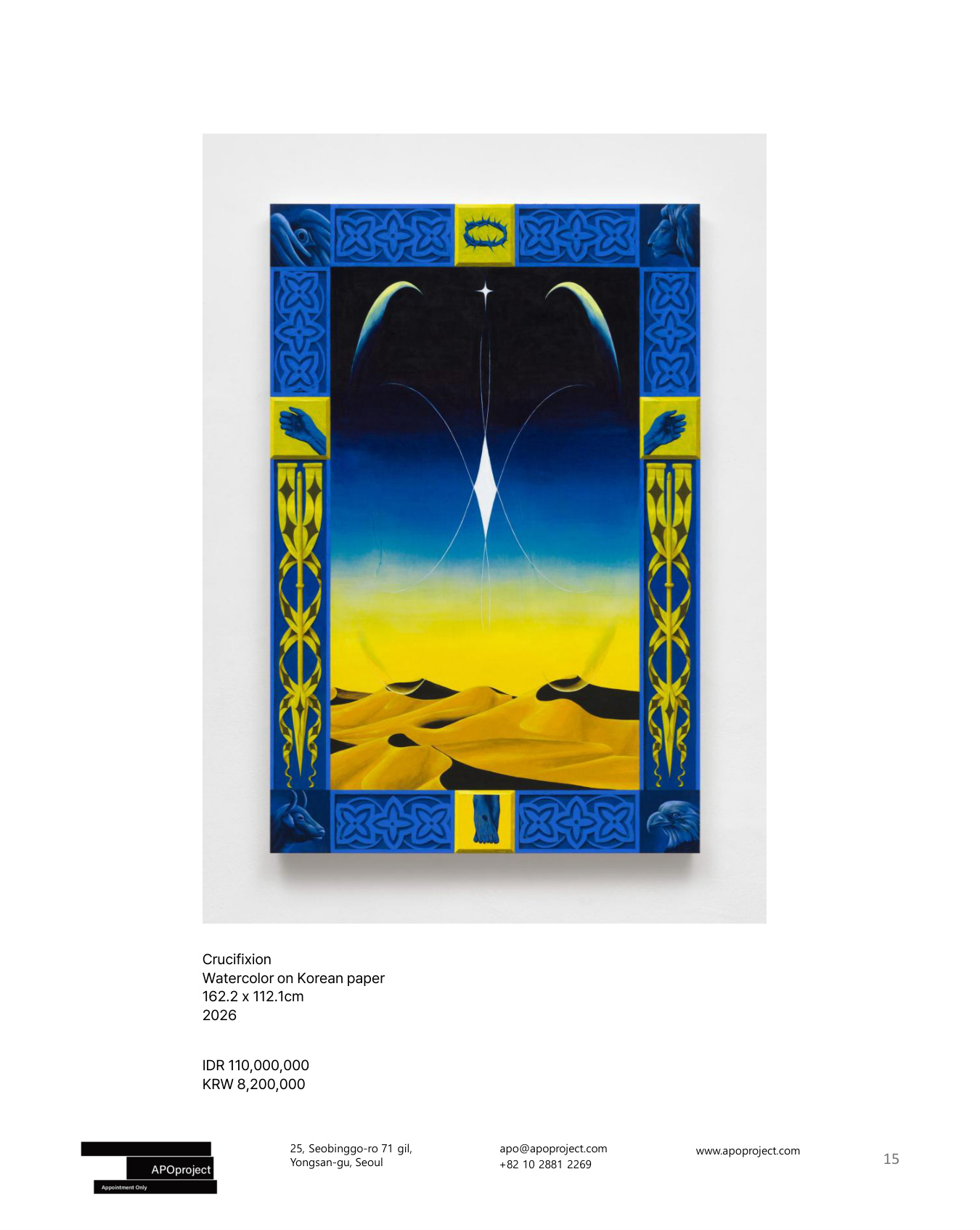
Joohye Moon focuses on the sensory collisions generated by images beyond the cultural codes and conventions embedded within them. Collecting and recombining images drawn from sources such as games and religious paintings, she explores how visual grammar and meaning construct different layers of perception. By juxtaposing images and symbols originating from disparate contexts, Moon creates scenes that feel simultaneously familiar and unfamiliar, disrupting established systems of meaning and encouraging repeated acts of looking and reinterpretation. Her works are developed on jangji, traditional Korean paper, through the accumulation of multiple translucent layers of pigment, emphasizing the material qualities and depth of the surface.
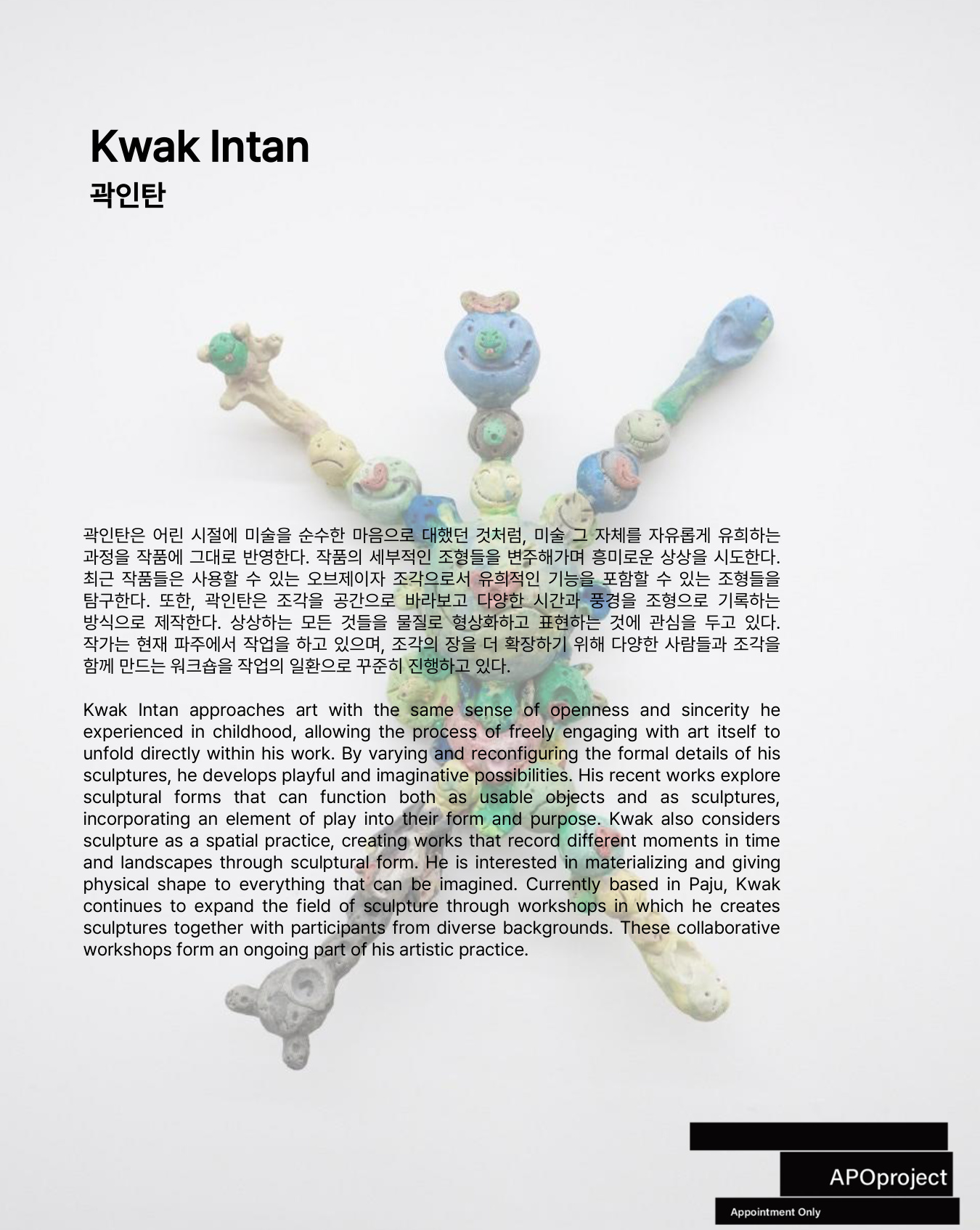
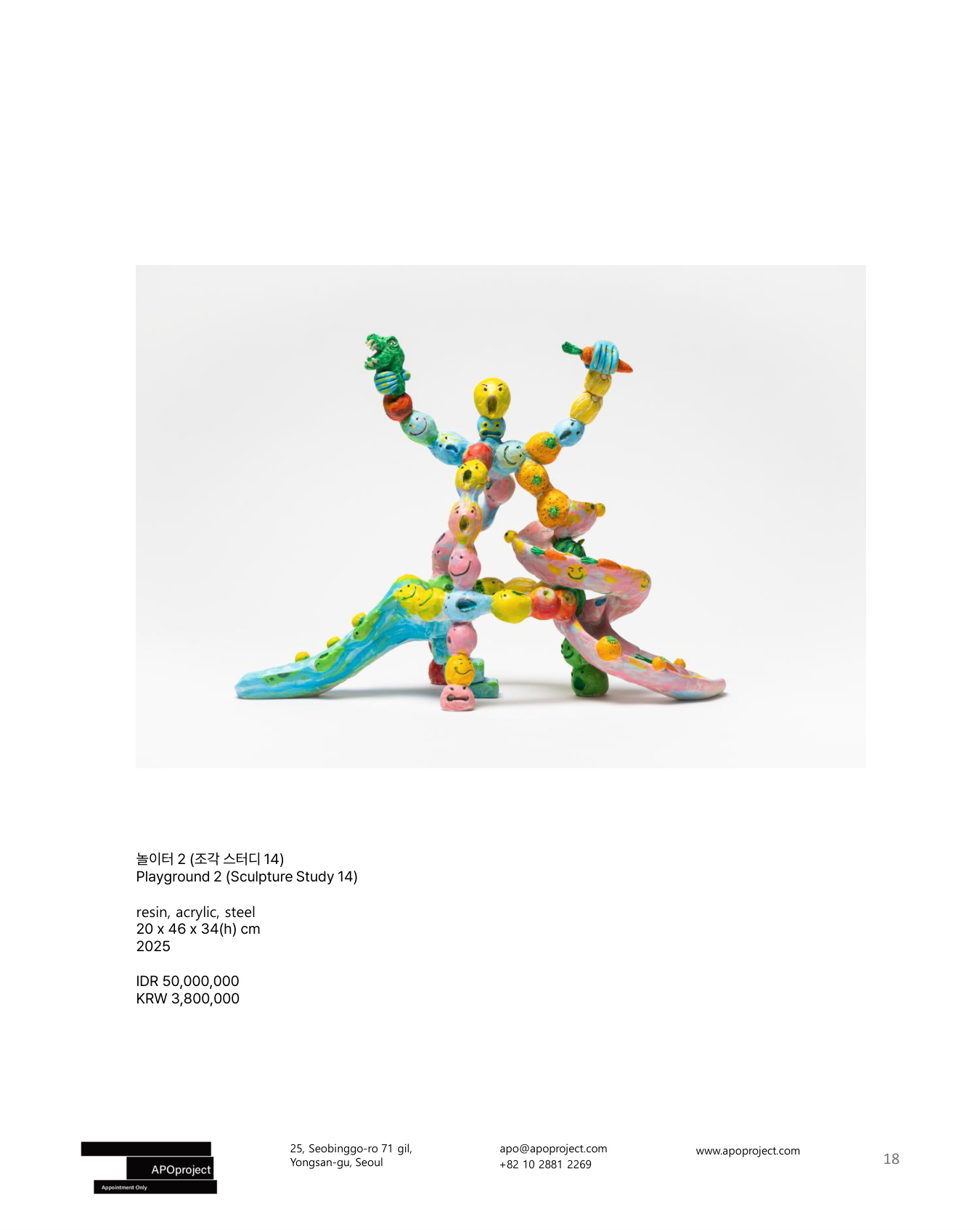
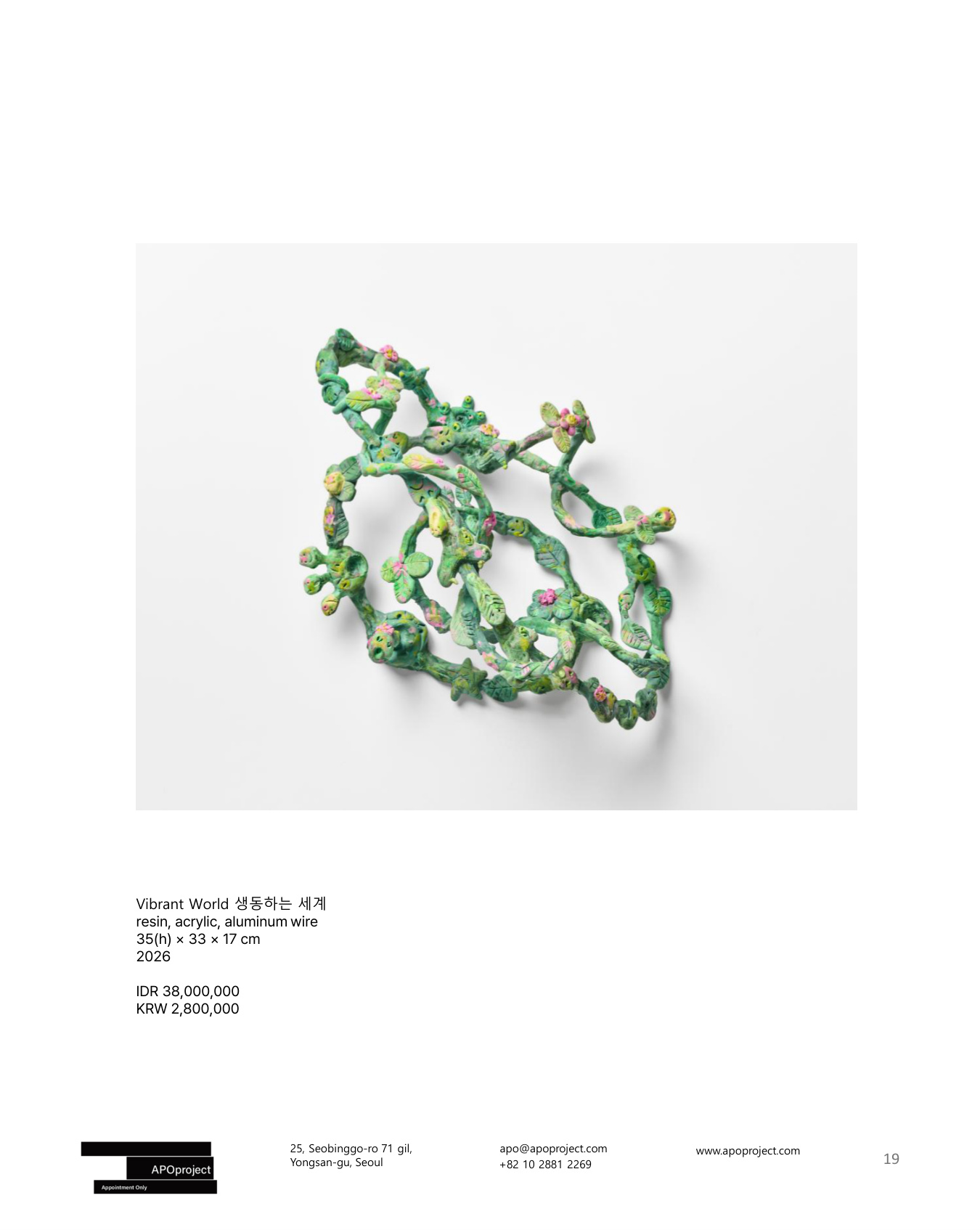
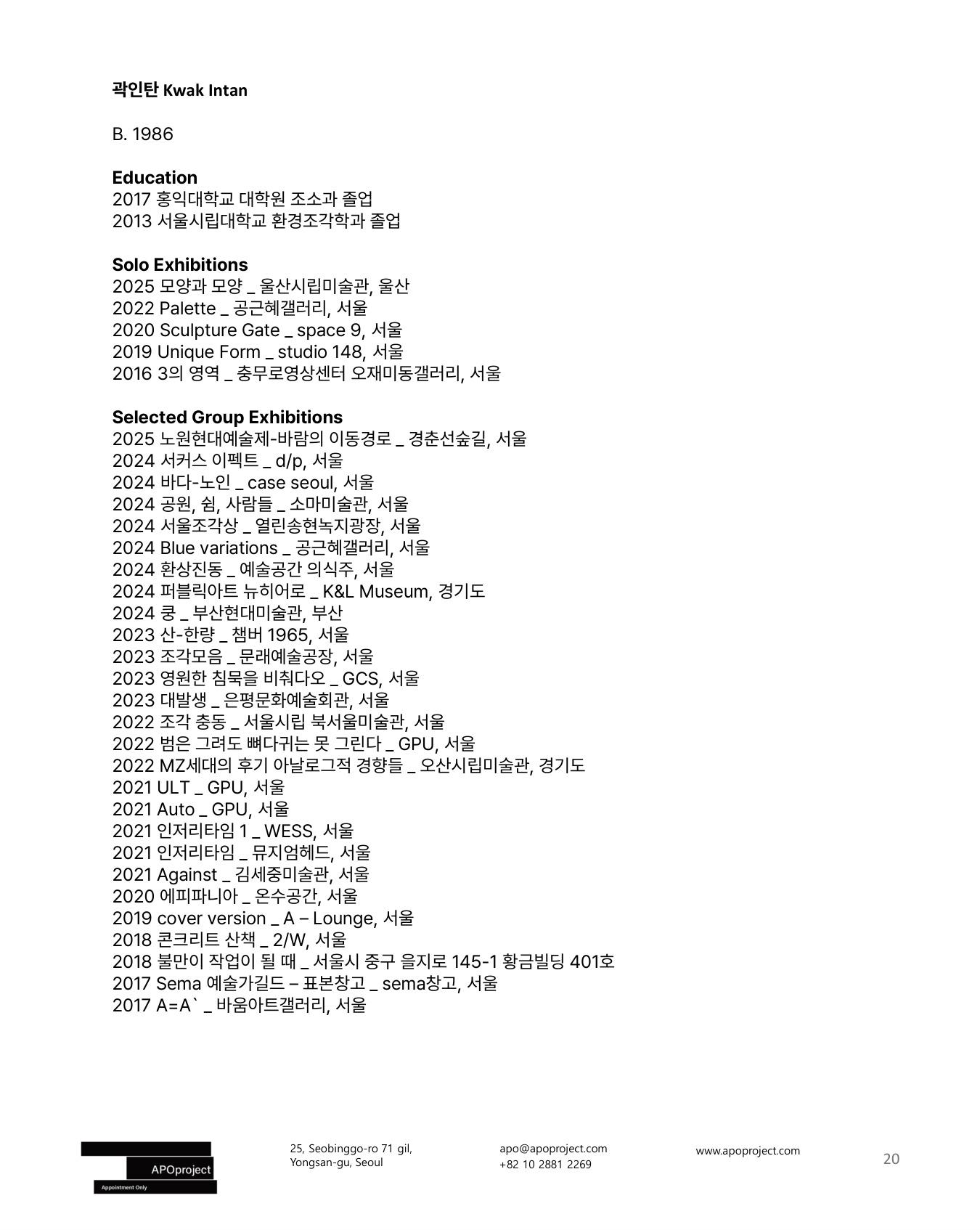
Intan Kwak approaches art with a sense of play, reflecting the freedom and curiosity with which he encountered art in childhood. Through variations of sculptural details and forms, he develops imaginative objects that often exist between sculpture and functional object. Kwak regards sculpture as a way of recording space, time, and landscape, translating imagined forms into physical matter. His recent practice further expands the field of sculpture through collaborative workshops, in which the process of making with others becomes an integral part of the work itself.
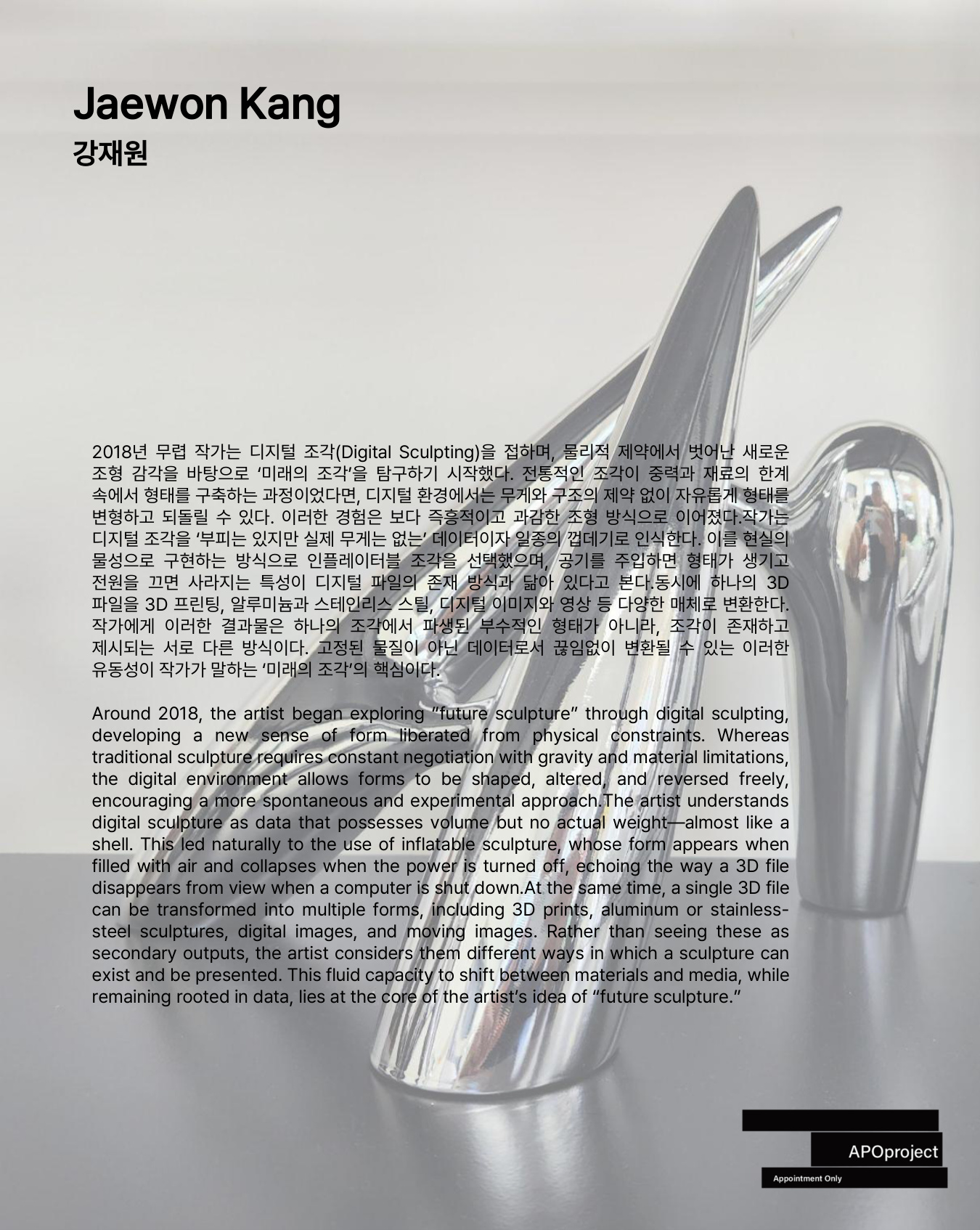
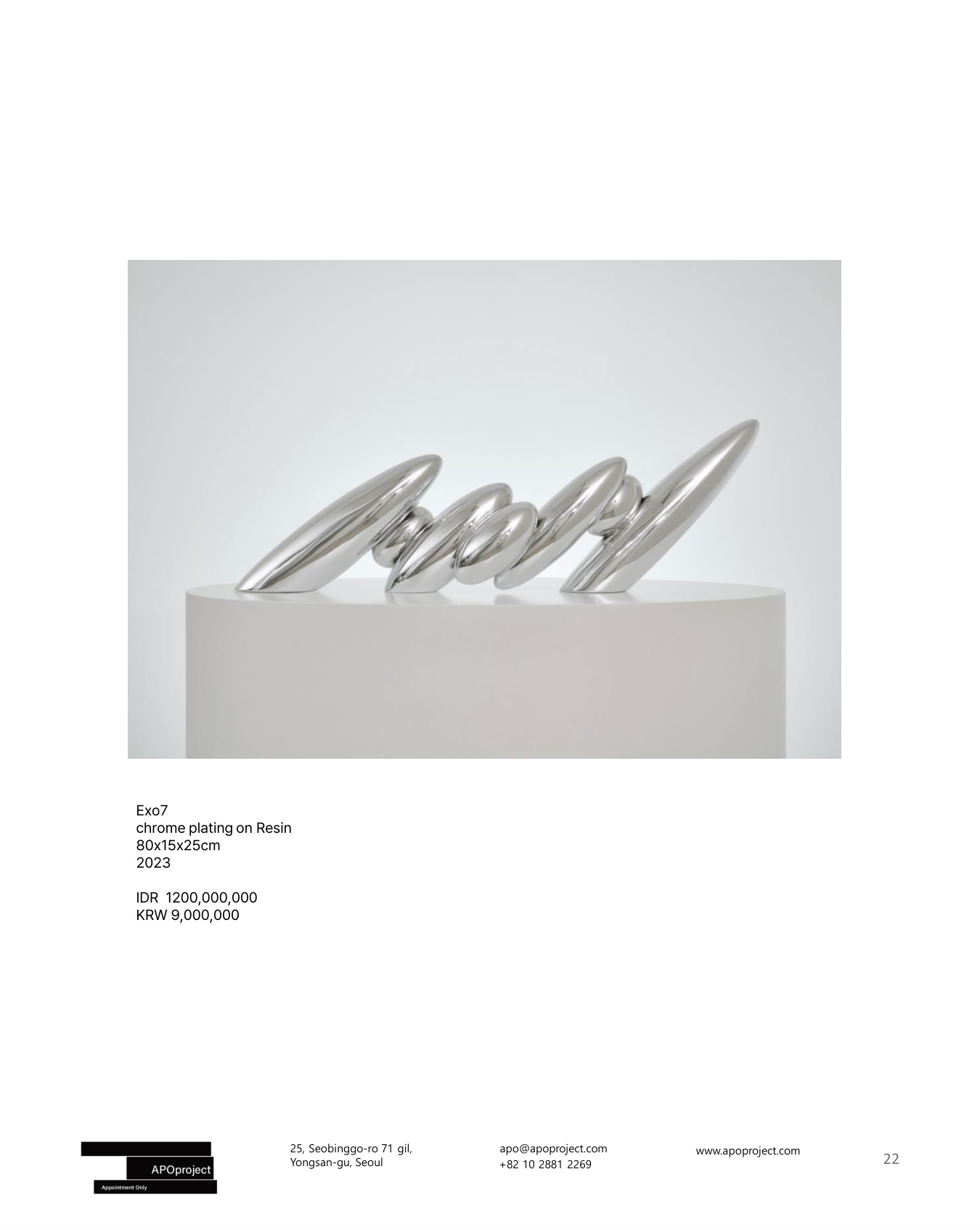
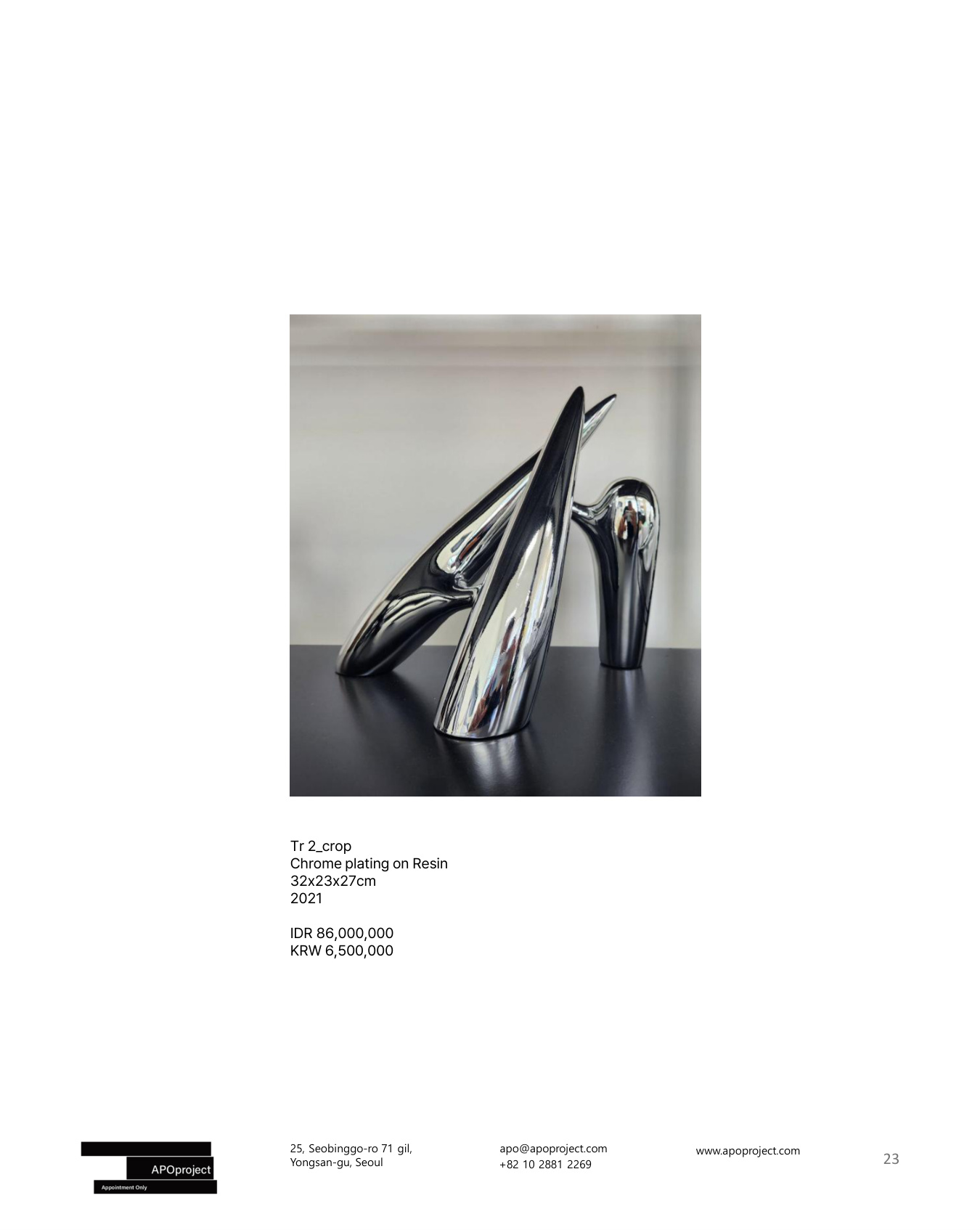
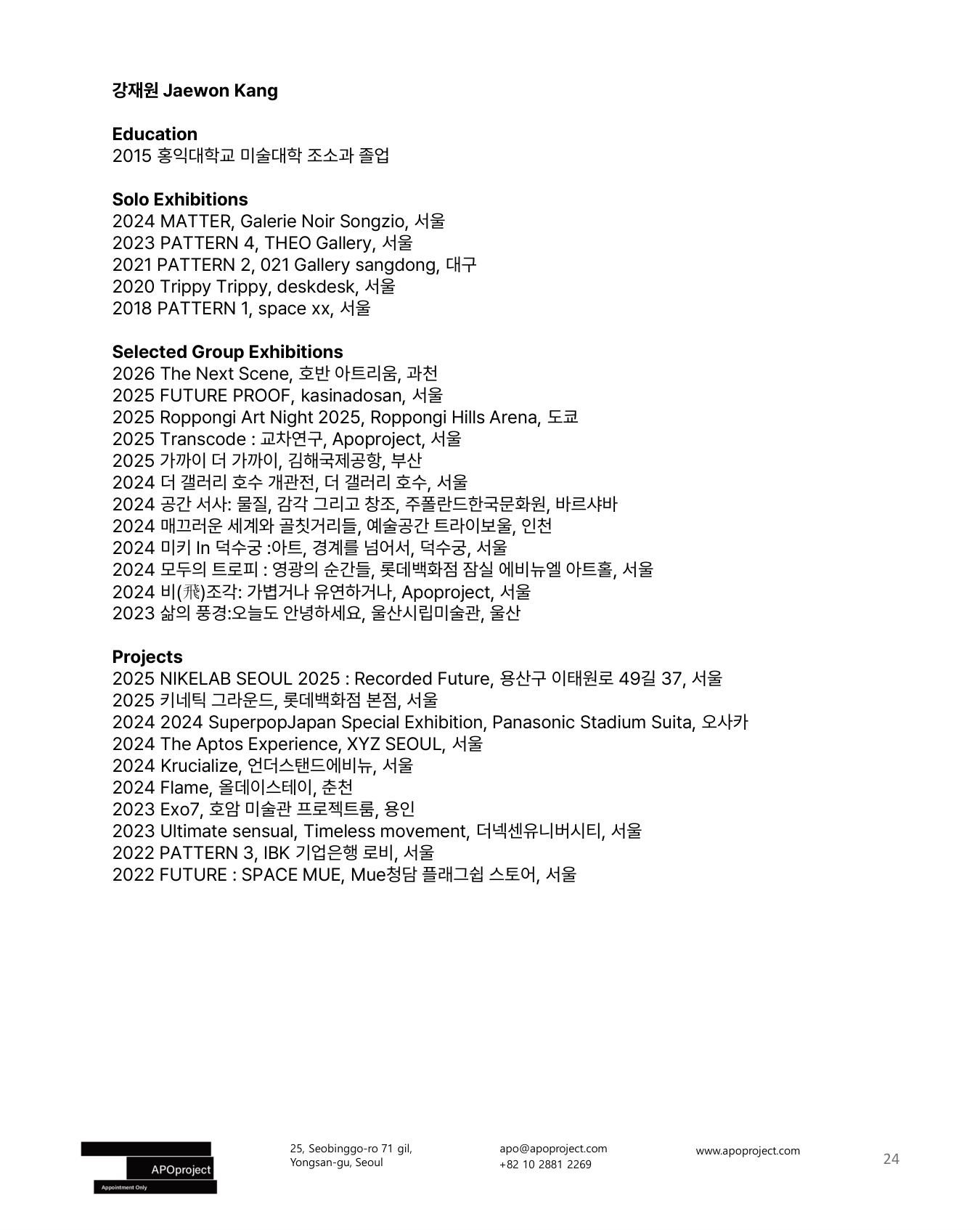
Jaewon Kang explores sculpture as an existence that does not remain fixed to a single material or completed form, but moves continuously between different states and conditions. Forms generated through digital sculpting and 3D modeling are translated into inflatable structures, resin, metal, images, video, and virtual environments, acquiring new scales, weights, surfaces, and spatial relationships each time. For Kang, these shifts are not simply reproductions of an original form, but processes of translation in which the form is continually adjusted and renewed as it passes through different materials and environments. Through works that expand with air and collapse back into flat surfaces, or through the recurrence of the same digital form across different materials and scales, Kang examines how the identity of sculpture may emerge not from a fixed material or final form, but from the movement between multiple states.
𝗕𝗼𝗼𝘁𝗵 𝗡𝗼. 𝗘𝟭𝟳
𝗞𝗼𝗿𝗲𝗮 𝗙𝗼𝗰𝘂𝘀
𝗔𝗣𝗢𝗽𝗿𝗼𝗷𝗲𝗰𝘁